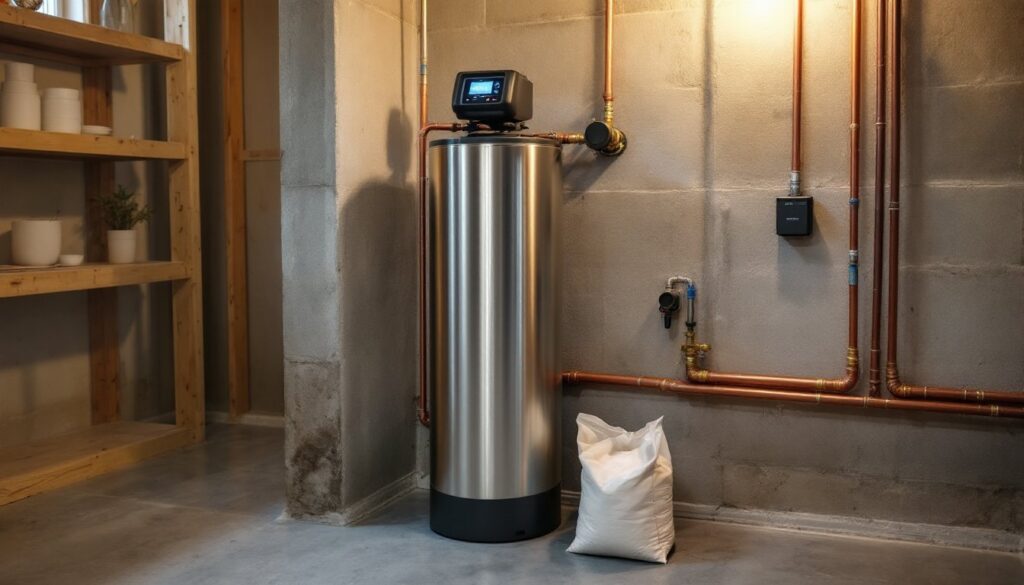

Hard water affects about 85% of U.S. homes, causing mineral buildup in pipes, reducing appliance lifespan, and leaving spots on dishes. A whole house water softener is one solution that tackles the problem at the source. If you’re considering one, you’re probably wondering what a whole house water softener costs and whether the investment makes sense for your household. Pricing varies significantly based on system size, installation complexity, and your local water hardness level. This guide breaks down what you’ll actually spend, from the unit itself to installation, maintenance, and long-term operating costs.
Table of Contents
ToggleKey Takeaways
- A whole house water softener typically costs $400–$2,500 for the unit alone, with installation labor adding $500–$1,500 depending on complexity and location.
- Installation costs can double your total investment, so compare multiple licensed plumber quotes in your area—prices vary significantly by region.
- Size your system based on water hardness level (test it first) and daily water usage to avoid wasting money on salt or undersizing that requires constant regeneration.
- Operating costs include $120–$1,080 annually for salt, plus $20–$50 monthly for regeneration water waste, making long-term savings realistic for families staying in their homes.
- Salt-based ion-exchange systems offer the best value and typically pay for themselves in 5–10 years through reduced appliance maintenance and longer water heater lifespan.
- Verify quotes include permits, all labor and parts, and confirm warranties (aim for 5–10 years on the tank) before committing to a water softener installation.
Average Cost of Whole House Water Softeners
A basic whole house water softener system typically runs between $400 and $2,500 for the unit alone. Mid-range systems that handle larger households or higher water hardness sit in the $1,500–$3,000 range, while premium systems with advanced features (like WiFi monitoring or higher grain capacity) can exceed $4,000.
These figures are for the softener itself, labor, installation parts, and permits add significant cost on top. A system suitable for a family of four treating moderately hard water might cost $800–$1,200 as a unit. That same homeowner could expect another $500–$1,500 in installation labor, depending on complexity and local rates.
System Size and Capacity Breakdown
Water softener capacity is measured in grains per gallon (GPG), how many grains of hardness minerals the resin can remove before needing regeneration. A typical family of four using 80 gallons of water daily with moderately hard water (10 GPG) needs a system that removes about 32,000 grains between regeneration cycles.
Small systems (24,000–32,000 grains) designed for 1–3 people or low hardness cost $400–$800. Medium systems (40,000–48,000 grains) for families of 4–6 run $800–$1,500. Large systems (64,000+ grains) for bigger households or very hard water range from $1,500–$3,000+. Oversizing a softener wastes money on salt and water: undersizing means frequent regeneration and incomplete softening. Measure your actual water hardness and daily usage before sizing, don’t guess.
Installation Costs vs. Unit Price
Installation is where many homeowners get surprised. The water softener unit itself might be $1,000, but installation can easily double that total cost.
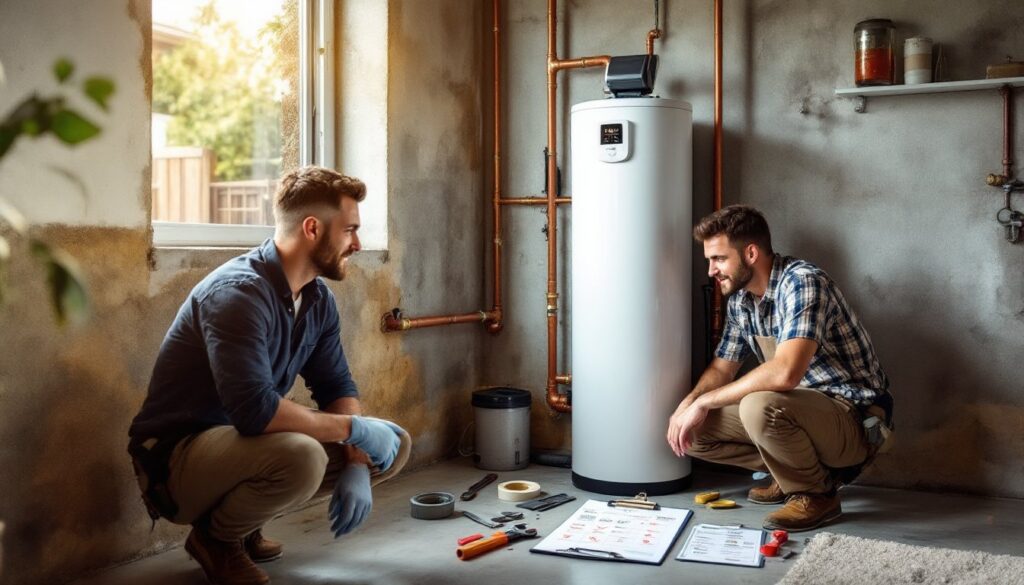
Labor ranges from $500 to $1,500 depending on how straightforward the job is. A simple bypass installation in a basement with easy access to the main water line takes 2–4 hours. Harder jobs, routing pipes through walls, installing in cramped spaces, adding a separate tap for outdoor faucets, or upgrading old plumbing, push into the $1,500+ labor range. Some regions are pricier than others: labor in urban areas and coastal markets runs 20–40% higher than rural locations.
Beyond labor, you’ll pay for parts: bypass valves ($50–$150), drain line installation ($100–$300), check valves ($20–$50), and sometimes sediment or pre-filters ($100–$300). If your plumbing is old galvanized steel, a plumber may recommend softener-friendly copper or PEX piping upgrades, which adds $200–$500+.
Don’t forget permits. Some jurisdictions require a plumbing permit ($50–$200) for water softener installation, especially in newer homes. Check with your local building department, unpermitted work can cause problems when selling. A licensed plumber handles permits, but verify this is included in their quote. Resources like HomeAdvisor and ImproveNet let you get multiple installer quotes and understand local pricing trends.
Factors That Influence Water Softener Pricing
Several variables shift the total cost up or down. Water hardness is the biggest: harder water requires more frequent regeneration, pushing you toward a larger, pricier system. A home with 25 GPG hardness needs about double the capacity of one with 10 GPG, and that’s a $400–$800 unit cost difference.
Daily water usage also matters. A family of six using 120+ gallons per day needs higher capacity than a couple using 60 gallons. Oversized systems waste salt and water during regeneration: undersized ones regenerate constantly and won’t fully soften.
Your water pressure, existing plumbing material, and whether you have a basement or crawlspace for installation all affect labor. If your main water line is buried, hard to access, or requires significant rerouting, expect higher costs. Homes with sump pumps, well water systems, or existing water filters nearby may need extra coordination during install.
Water Hardness Level and Test Costs
Before buying, test your water hardness. Most local water departments provide free or cheap hardness reports: you can request one by calling your utility. A mail-in hardness test kit costs $20–$50 and gives precise results. Don’t guess, I’ve seen homeowners buy undersized systems because they assumed “hard” meant “really hard.”
Water hardness ranges: 0–60 mg/L (0–3.5 GPG) is soft: 61–120 mg/L (3.5–7 GPG) is moderately hard: 121–180 mg/L (7–10.5 GPG) is hard: anything above that is very hard. Results directly influence system sizing and cost. Very hard water might require a larger tank or even a dual-tank system (two softeners alternating regeneration for continuous soft water), which costs 50–100% more. That investment makes sense for large families or commercial setups but is overkill for most homes.
Maintenance and Operating Expenses
The softener itself is just the start. Year-round operating costs include salt (for ion-exchange systems), water used during regeneration, and occasional repairs.
Salt costs run $10–$30 per 40-lb bag, and a typical family uses 1–3 bags per month depending on hardness and system size. That’s $120–$1,080 per year. Some regions have higher salt prices due to availability. Using a high-efficiency softener can cut salt use by 15–25%. Pellet salt, rock salt, and solar salt all work: pellets are purer and leave less residue but cost more.
Regenerations cycle water to waste, using 20–40 gallons per cycle in traditional systems. High-efficiency models use 5–15 gallons. That translates to roughly 600–1,200 gallons per month down the drain, or higher for very hard water. If your sewer is metered, expect a $20–$50 monthly bump. This varies by region and water hardness.
Maintenance is minimal if you stay on top of salt. Plan $100–$300 per year for salt delivery or pickup, brine tank cleaning (every 2–5 years), and resin inspections. Most systems last 15–20 years: resin replacement (the heart of the softener) costs $500–$1,500 but is rarely needed before year 10–15. Professional servicing, if you prefer it over DIY, runs $150–$300 per visit. The water softener installation cost guide from Angi has useful breakdowns of ongoing costs and long-term ROI.
Comparing System Types and Value
Not all water softeners are the same. Salt-based ion-exchange softeners are the cheapest upfront ($400–$2,000 for the unit) and most effective, but require salt refilling and produce salty wastewater. Dual-tank systems cost $2,000–$4,000+ but provide continuous soft water, useful if someone showers while regeneration runs. Salt-free softeners and conditioners cost $400–$1,500 but don’t actually remove hardness minerals: they condition the water to prevent scaling. They’re cheaper long-term (no salt, no regeneration waste) but won’t deliver soap-saving, skin-softening results.
Magnetic and electronic softeners ($200–$500) have mixed reviews and aren’t certified by the Water Quality Association: avoid them unless budget is your only concern.
For value: a salt-based system paying for itself typically takes 5–10 years through reduced appliance maintenance, longer water heater life, and softer skin and hair. If you’re staying in your home long-term or have very hard water, the payoff is real. Monthly operating costs of $30–$50 (salt + regeneration water) are cheaper than buying bottled water or replacing appliances early.
Get multiple quotes from licensed plumbers in your area, prices swing wildly by region. A system costing $3,000 in one zip code might run $2,200 in another 20 miles away. Verify that quotes include permits, labor, parts, and startup (filling the brine tank and testing for proper softening). Ask about warranties: good softeners come with 5–10 year manufacturer coverage on the tank and 1–3 years on electronics.