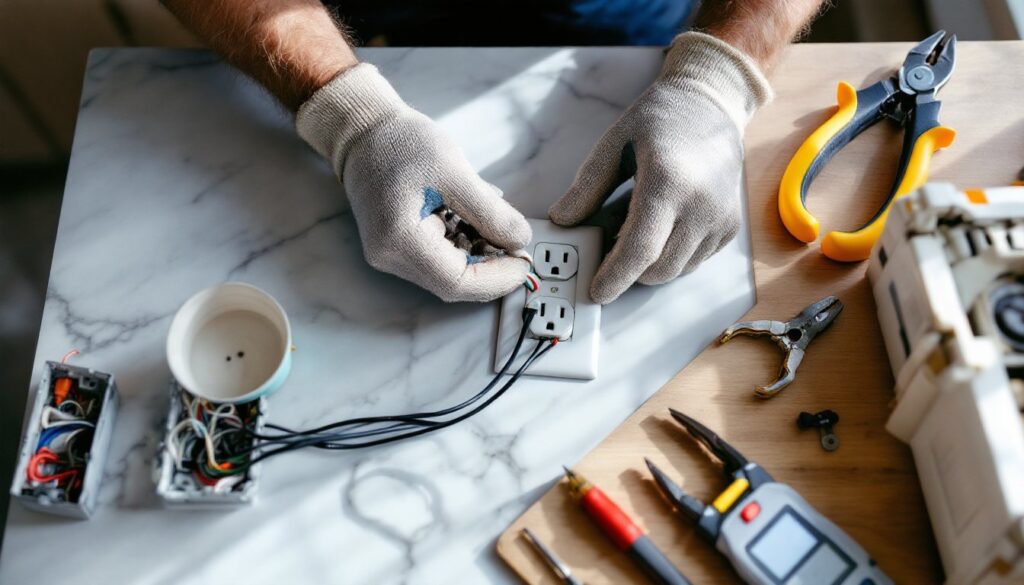

Whether you’re upgrading a kitchen outlet or adding protection to a bathroom, replacing a standard outlet with a GFCI (Ground Fault Circuit Interrupter) outlet is one of those projects where knowing the real costs upfront saves headaches later. The cost to replace an outlet with GFCI ranges from as little as $15 to $20 if you’re doing it yourself, to $130 to $300+ when hiring a licensed electrician. The gap depends on your comfort with electrical work, local labor rates, and whether the job requires permits or additional wiring. This guide breaks down exactly what you’ll pay and walks you through the decision of whether to grab your tools or call in a pro.
Table of Contents
ToggleKey Takeaways
- The cost to replace an outlet with GFCI ranges from $20–$45 for DIY installation to $130–$300+ when hiring a licensed electrician, depending on location and complexity.
- GFCI outlets detect electrical imbalances and prevent electrocution by cutting power in milliseconds, making them essential safety upgrades for kitchens, bathrooms, and areas near water sources.
- DIY GFCI outlet replacement is one of the safest electrical tasks for homeowners if you’re comfortable using a voltage tester and working with existing accessible outlets.
- Professional installation costs increase significantly for difficult-to-access outlets, damaged wiring, permits, and regional labor rates, with urban areas running 30–50% higher than national averages.
- Replace a GFCI outlet yourself by turning off the breaker, testing for power, disconnecting the old outlet, and connecting the new one with proper wire-to-terminal matching (black to brass, white to silver, ground to green).
- Hire a professional electrician if the outlet is behind appliances, in a crawlspace, wiring appears corroded, or your local code requires a licensed electrician for electrical work.
Understanding GFCI Outlets and Why They Matter
A GFCI outlet detects electrical imbalances, like water bridging between hot and neutral lines, and cuts power in milliseconds. They’re required by code in kitchens, bathrooms, garages, basements, crawlspaces, and anywhere within 6 feet of water sources. A standard outlet gives you no protection: a GFCI outlet saves lives by preventing electrocution. If you’ve ever triggered a breaker at the bathroom sink, you’ve experienced what happens without one (though a breaker cuts power slower than a GFCI).
There are two ways to add GFCI protection: install a GFCI outlet itself (what most homeowners do), or use a GFCI breaker in the panel (more expensive upfront, but protects everything downstream). Since replacing an outlet is cheaper and simpler, we’ll focus on that. The outlet itself is a like a regular outlet but with a “test” and “reset” button on the face. You can find them at any big-box store for $10 to $30 depending on amperage and quality. The real cost comes from labor if you’re not comfortable working with live current.
Average Cost of GFCI Outlet Replacement
DIY Replacement Costs
If you’re replacing an existing outlet in an accessible location and don’t need additional wiring, expect to spend $15 to $30 on the GFCI outlet itself. Buy a quality outlet, brands like Leviton, Pass & Seymour, and Eaton are reliable. Add $5 to $10 for a voltage tester (essential safety tool, non-negotiable). A junction box, if needed, adds another $3 to $5.
Total DIY cost: $20 to $45 for a straightforward outlet swap. No labor charges, no markup, just the hardware.
Professional Installation Costs
According to pricing data from GFCI outlet installation resources, a licensed electrician typically charges $130 to $300 per outlet for replacement. This includes the outlet, labor, and a service call. Some electricians charge a flat trip fee ($75 to $150) plus hourly rates ($75 to $150 per hour): others quote a project price. If you’re replacing multiple outlets, the per-outlet cost can drop to $100 to $150 as the electrician amortizes the trip. In high-cost urban areas or if the outlet is in a tough-to-reach wall cavity, expect the top end of that range or higher.
Factors That Affect GFCI Replacement Pricing
Outlet type and amperage. A standard 15-amp GFCI outlet costs $10 to $20. A 20-amp outlet or weather-resistant version runs $20 to $35. Smart GFCI outlets with USB charging or app control push $50 to $100, useful but pricier.
Location and accessibility. An outlet under a sink or in a kitchen backsplash is quick work. An outlet behind heavy cabinets, in a crawlspace, or above a soffit takes more time and labor. Difficulty adds $50 to $200 to professional labor.
Existing wiring condition. If the outlet box is already there, wired, and accessible, replacement is simple. If the wire is damaged, corroded, or the box needs repair, the electrician has to spend time troubleshooting and potentially rewiring. This can add $100 to $400+.
Permits and inspections. Some jurisdictions require permits for electrical work: others don’t for simple outlet replacement. A permit adds $50 to $150 in fees plus inspection time. Check your local building department before starting.
Regional labor rates. Electricians in San Francisco charge more than those in rural Ohio. Coastal and major metro areas run 30% to 50% higher than national averages.
Multiple outlets. Replacing three outlets costs less per outlet than replacing one. Most electricians offer a slight discount for batch jobs, though the trip fee stays the same.
DIY vs. Hiring a Professional Electrician
Go DIY if:
- You have a working outlet in an easy-to-access location.
- You’re comfortable turning off breakers and testing for power.
- You want to save $100 to $250 in labor.
- You’re replacing just one or two outlets.
Hire a professional if:
- The outlet is behind appliances, in a crawlspace, or in the wall cavity.
- You don’t know how to use a voltage tester or aren’t sure if power is fully off.
- The existing wiring looks corroded, loose, or damaged.
- You need a permit or inspection (many jurisdictions require licensed electrician sign-off).
- Local code requires a licensed electrician for any electrical work (rare, but check first).
Honestly? Swapping an outlet is one of the safest DIY electrical tasks because you’re not touching the breaker panel or running new wire. But if you’re unsure at any step, stop and call an electrician. A $200 service call beats a hospital bill. Resources like Angi’s contractor directory and ImproveNet’s cost guides help you find vetted local electricians and compare quotes in minutes.
Step-By-Step Guide to Installing a GFCI Outlet Yourself
Before you start: Safety first. Electrical work has no room for “close enough.” Wear safety glasses, keep a fire extinguisher nearby, and never work on live circuits.
Tools you’ll need:
- Voltage tester or multimeter (non-negotiable).
- Screwdrivers: Phillips and flat-head.
- Wire strippers (if you need to trim wire).
- Pliers: needle-nose and adjustable.
- Flashlight or headlamp.
- Duct tape (for temporarily holding wires).
Materials:
- GFCI outlet (15-amp or 20-amp, match existing wire gauge).
- Wire nuts (if replacing corroded ones).
- Outlet box screws (if original screws are stripped).
Steps:
-
Turn off the breaker. Locate the breaker that controls the outlet (usually labeled). Switch it off. Return to the outlet and use your voltage tester to confirm power is off. Test the tester on a live outlet first to make sure it’s working.
-
Remove the cover plate. Unscrew and set aside. Note the wire colors: black (hot), white (neutral), bare copper or green (ground).
-
Unscrew the outlet. Gently pull the old outlet out of the box. Don’t yank, wires are connected.
-
Disconnect the wires. Loosen the terminal screws on the old outlet and remove each wire. You’ll typically see two hot terminals (brass screws), two neutral terminals (silver screws), and one or two ground terminals (green screws).
-
Connect the GFCI outlet. Strip about 3/4 inch of insulation from each wire (if needed). Loop each wire clockwise around the terminal screw, then tighten. Hot (black) → brass, neutral (white) → silver, ground → green. If you have two sets of wires, connect the “line” terminals first (the ones the power comes from), not the “load” terminals.
-
Carefully push the outlet back into the box. Make sure wires don’t pinch. The outlet should sit flush with the box.
-
Screw the outlet in place. Use the two screws at top and bottom of the outlet. Don’t overtighten, you’ll strip the box.
-
Reinstall the cover plate. Screw it on, step back, and admire your work.
-
Turn the breaker back on. Test the GFCI by pressing “test”, power should cut immediately. Press “reset” and verify power returns. Test it once a month to ensure it’s still working.
Common mistakes:
- Not testing for power first. Assume the outlet is live until proven otherwise.
- Reversing hot and neutral. Double-check wire colors before connecting.
- Overtightening terminal screws, which strips the brass or breaks the wire.
- Ignoring the “line” vs. “load” terminals. If you have two sets of wires, the incoming power goes in “line,” and downstream outlets (if you want them protected too) go in “load.”