
Pressure washing transforms a grimy exterior into a clean slate, but homeowners often underestimate the cost or overestimate the savings from DIY attempts. Whether you’re tackling a moss-covered deck, grime-stained siding, or stained driveway concrete, knowing what pressure washing actually costs, and what factors drive that price, helps you make the right call between hiring a pro or renting equipment yourself. This guide breaks down current 2026 pricing, explains what moves the needle on cost, and shows you how to save money without sacrificing results or safety.
Key Takeaways
- Professional pressure washing house costs range from $200 to $600 for a full exterior, with the national average around $310, depending on location and job complexity.
- Home size, surface type, and condition are the primary cost drivers—expect to pay 30% to 50% more for heavily soiled surfaces or delicate materials like wood siding and stucco.
- DIY pressure washing rentals cost $150 to $200 but carry hidden risks including equipment damage, personal injury, and potential repairs exceeding $500 to $2,000 that often outweigh savings.
- Bundle multiple services like gutter cleaning or window washing, and schedule during off-season months to save 15% to 25% on pressure washing costs.
- Always hire licensed, insured contractors and compare quotes from multiple sources—bids significantly below market rates are red flags for poor service quality and inadequate safety measures.
Average Cost of Professional Pressure Washing
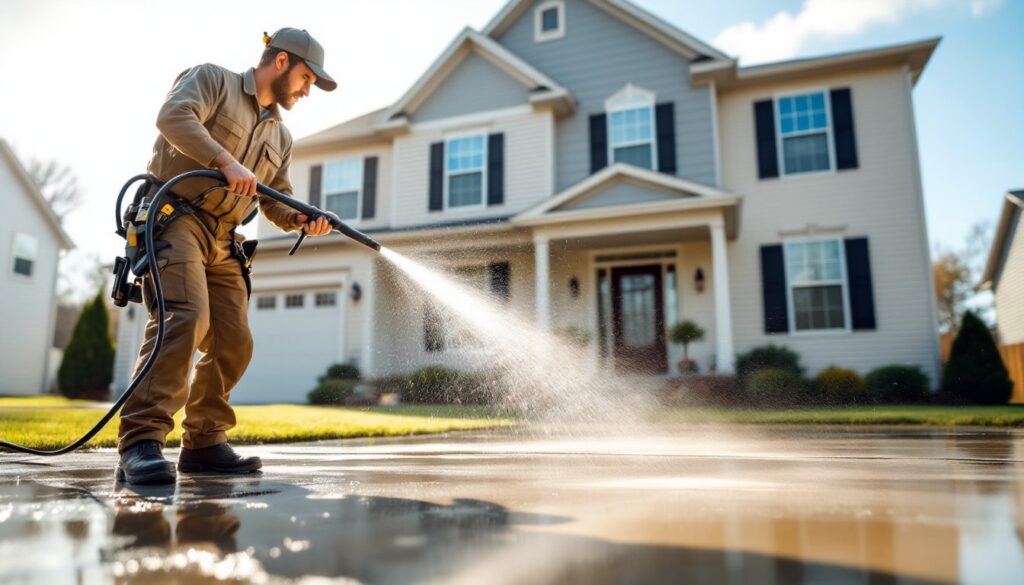
Professional pressure washing services typically run between $200 and $600 for a full house exterior, though prices fluctuate widely based on location, company overhead, and job complexity. According to recent data, the national average hovers around $310 for standard residential work, with most jobs falling in the $212 to $448 range. Driveway-only projects are cheaper, usually $100 to $250, while large multi-story homes with siding, decks, and concrete patios can exceed $800.
These figures assume standard residential pressure washing at moderate pressure levels (1,500 to 2,500 PSI) on common surfaces like vinyl siding, concrete, and composite decking. If your home has delicate surfaces, wood siding, stucco, or older brick, or requires specialized cleaning solutions for mold, mildew, or algae, expect to add 25% to 50% to the base cost. Regional labor rates matter too: urban markets and areas with higher cost-of-living typically charge 20% to 40% more than rural regions.
Factors That Affect Pressure Washing Prices
Several variables determine what a contractor quotes for your job. Understanding these factors helps you anticipate costs and spot reasonable pricing versus inflated estimates.
Home Size and Square Footage
Square footage is the primary cost driver. Most contractors charge either a per-square-foot rate (typically $0.05 to $0.15 per sq ft for basic house pressure washing) or a flat rate based on estimated job duration. A 2,000 sq ft single-story home usually costs $100 to $300, while a 4,000 sq ft two-story property might run $300 to $600. The relationship isn’t always linear, larger jobs sometimes offer slight per-unit savings because setup time and travel costs get distributed across more area. Roof pitch, gutter access, and the number of stories all affect how long the job takes, directly impacting labor costs.
Surface Type and Condition
Not all exterior surfaces handle pressure equally. Concrete driveways and patios tolerate high pressure (2,500+ PSI) and cost less to clean. Vinyl or fiber cement siding requires gentler pressure (1,500–1,800 PSI) and specialized technique to avoid damage, contractors charge more for this expertise. Wood siding, stucco, and historic brick demand even greater care, sometimes requiring low-pressure soft-washing with chemical cleaners instead of traditional pressure washing. Heavy algae, mold, or mildew buildup also increases cost because contractors must apply pre-treatment solutions and allow dwell time for chemicals to work, stretching labor hours. A heavily soiled home might cost 30% to 50% more than a moderately dirty one.
DIY vs. Professional Pressure Washing: Cost Comparison
Renting a pressure washer costs $40 to $100 per day, plus $30 to $60 for cleaning solution and supplies. A typical DIY project, driveway, deck, or single siding wall, takes 4 to 8 hours, so a weekend rental is realistic. The math seems compelling: spend $150 versus $300 to $600 for professional service.
But, several hidden costs and risks shift the equation. Pressure washers are dangerous, improper technique causes injury to hands, eyes, and feet, plus permanent damage to siding, wood, stucco, and windows. Rental equipment is often older or worn, sometimes delivering uneven pressure or poor flow, wasting your time. You’ll also handle debris cleanup, chemical disposal, and potential water runoff issues that professionals manage. If you damage siding, break a window, or strip paint during DIY work, repair costs ($500 to $2,000+) dwarf the savings. For small, straightforward jobs, a concrete patio or short driveway section, DIY renting makes sense if you’re experienced and cautious. For anything involving delicate surfaces, multi-story work, or extensive mold, hire a professional. When comparing quotes, check that the contractor carries liability insurance and properly trained staff rather than just bidding low.
How to Save Money on Pressure Washing Services
Smart homeowners bundle services and time requests strategically to lower costs. If your contractor offers gutter cleaning, roof debris removal, or window washing, packaging these together often earns a 10% to 20% discount versus separate service calls. Scheduling during off-season months (late fall or early spring, before peak spring cleaning demand) can yield 15% to 25% price breaks, contractors have lighter schedules and may offer incentive rates.
Request annual or bi-annual maintenance contracts if you plan regular washing. A contractor who knows they’ll return twice yearly often quotes 30% lower rates than one-off jobs. Prepare your yard before the appointment: move outdoor furniture, potted plants, and equipment away from work areas so contractors waste no time prepping. Close windows and doors, and ask neighbors to move vehicles from the street if driveway work is planned. These small steps reduce job time and let contractors lower prices.
Gather multiple quotes from local contractors, use platforms like Angi for homeowner reviews and contractor estimates or ImproveNet to compare project costs and track typical regional pricing. A quote 50% below market rate is a red flag: the contractor may lack insurance, use inappropriate pressure levels, or cut corners on cleaning solutions. Conversely, the highest bid isn’t always best, mid-range quotes from insured, well-reviewed companies offer the safest value. Always verify licensing and insurance before signing any agreement.
Conclusion
Pressure washing costs reflect job size, surface type, condition, and local labor rates. Professional service typically runs $200 to $600 for a full house, while DIY rentals cost $150 to $200 but carry real safety and damage risks. Smart shopping, bundling services, timing off-season, and comparing insured contractors, cuts costs without sacrificing quality or your home’s integrity.