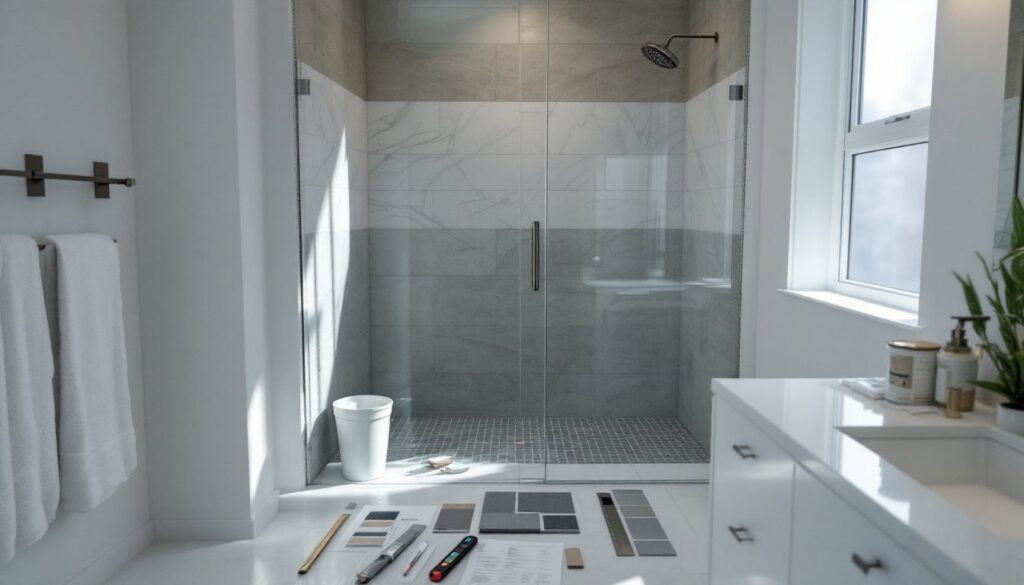

A shower remodel can transform one of your home’s most-used spaces, but understanding the cost to remodel a shower before you begin is crucial. Depending on scope and materials, you might spend anywhere from $1,500 for a straightforward update to $15,000+ for a luxury overhaul. This guide breaks down what you’ll actually pay for a shower renovation, which factors drive pricing, and where you can trim costs without compromising quality. Whether you’re tackling a cosmetic refresh or a full gut renovation, knowing what to expect helps you budget smartly and avoid sticker shock mid-project.
Key Takeaways
- The cost to remodel a shower ranges from $1,500 for budget cosmetic updates to $15,000+ for luxury renovations, with the national average around $7,000.
- Tile selection and materials represent the largest cost driver, with ceramic running $2–$8 per square foot, porcelain $3–$12, and natural stone reaching $10–$30+ per square foot.
- Labor typically accounts for 40–60% of remodel expenses, with regional variation pushing urban rates 20–50% higher than rural areas.
- Prioritizing waterproofing and proper substrate preparation prevents costly mold and water damage later, making it a non-negotiable investment.
- Strategic upgrades like choosing large-format tiles, reusing the existing footprint, and obtaining multiple contractor bids can significantly reduce shower remodel costs without compromising quality.
Average Shower Remodel Costs by Budget Level
Shower remodel costs span a wide range based on scope and material choices. A budget remodel (cosmetic updates: new fixtures, paint, tile) typically runs $1,500–$3,000. This includes resurfacing or replacing trim, swapping out hardware, and fresh caulk and grout work.
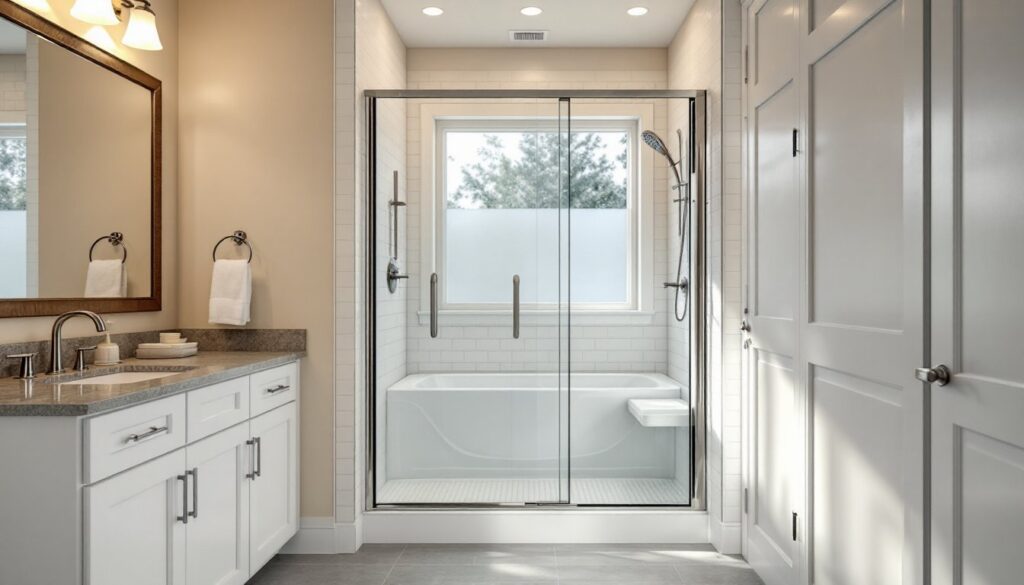
A mid-range remodel ($3,500–$8,000) involves partial structural changes: removing and replacing a section of tile, upgrading the showerhead and valve system, adding a small niche or bench, and refinishing walls. This is the sweet spot for most homeowners wanting a noticeable upgrade without major plumbing work.
A high-end remodel ($8,000–$15,000+) includes complete demolition, new plumbing rough-in, custom tile work (large-format or specialty finishes), heated floors, steam functionality, luxury fixtures, and potentially expanding the footprint. These projects often require permits and licensed plumbers or contractors. According to HomeAdvisor’s shower remodel cost data, the national average sits around $7,000, though regional labor costs and local material availability shift that figure significantly.
Key Factors That Impact Your Shower Renovation Price
Materials and Finishes
Tile choice is often the biggest material-cost driver. Budget ceramic tile runs $2–$8 per square foot: porcelain costs $3–$12 per sq ft: natural stone (marble, slate, granite) jumps to $10–$30+ per sq ft before installation. A typical shower (around 100–150 sq ft of tile) can easily soak up $1,500–$4,500 in material alone.
Fixtures and hardware add up quickly. A basic showerhead and trim kit might cost $100–$300, while a rainfall showerhead with a digital valve runs $400–$1,200. High-end brands command premium prices but often deliver better durability and warranty support.
Grout, caulk, underlayment (waterproofing membrane), and substrate (cement board, gypsum board) are easy to underestimate. Waterproofing is non-negotiable: skipping quality Schluter Systems or comparable membrane products leads to mold and structural failure down the road.
Labor and Contractor Rates
Labor typically accounts for 40–60% of a mid-range remodel cost. Plumbers charge $75–$150+ per hour (or flat rates for specific tasks like valve replacement). Tile installers range $8–$20 per sq ft, so that 100 sq ft shower could easily require $800–$2,000 in labor.
Regional variation is stark. Urban areas and high-cost-of-living regions push labor rates 20–50% higher than rural zones. Permit inspections and code compliance requirements add time and cost. Always request references and verify licensing before hiring: a low bid often signals corner-cutting on prep work or material quality. Sites like Angi offer contractor reviews and cost estimates specific to your area and project type.
Common Shower Upgrades and Individual Costs
Breaking down typical upgrades helps you prioritize:
• Showerhead and trim upgrade: $200–$800 (fixture swap without plumbing changes)
• Recessed shampoo niche or shelf: $150–$400 (tile framing, waterproofing, trim)
• Tile re-glazing or refinishing: $500–$1,200 (cleaning, repair, coating application, avoids full demolition)
• Complete tile replacement (walls only, existing substrate): $1,200–$3,500
• New plumbing fixtures and rough-in: $800–$2,000+ (valve, lines, pressure balance)
• Heated floor mat: $400–$1,500 (material and wiring)
• Steam shower conversion: $2,000–$5,000+ (generator, lines, controls)
• Grab bars and accessibility features: $200–$600
• Custom glass shower door or enclosure: $400–$1,500
Pick a few high-impact upgrades rather than trying to do everything at once. A new showerhead, fresh tile caulk, and a sleek trim kit can transform the look for under $500, perfect for renters or staged homes.
Budget-Friendly vs. Luxury Remodel Breakdown
A $2,500 budget remodel might include: $300 in new fixtures (chrome showerhead, handles), $800 in ceramic tile and labor for a single accent wall, $400 in grout and caulk refresh, $600 in paint and sealant, and $400 for miscellaneous hardware and trim.
A $7,000 mid-range remodel allocates: $2,000 for porcelain tile and professional installation, $1,200 for plumbing upgrades (valve, diverter, trim), $1,500 in labor for prep and demolition, $800 for waterproofing and substrate, $800 for a custom niche and glass enclosure, and $700 for finishing touches.
A $12,000 luxury remodel distributes resources as: $3,500 for premium tile (large-format, mixed materials) and expert installation, $2,000 for high-end fixtures and controls (digital valve, rainfall head), $2,500 in labor for structural changes or expanded footprint, $1,500 for complete waterproofing and heated floors, $1,500 for custom niche, bench, and built-in shelving, and $1,000 for heated towel rack, lighting, and ventilation upgrades.
Luxury builds justify higher spend with durability, customization, and long-term resilience. Budget builds focus on immediate impact and functionality, still a solid investment if prep and waterproofing aren’t overlooked.
Tips for Saving Money on Your Shower Remodel
Prioritize waterproofing and prep work. Don’t skimp here: mold and water damage cost far more to fix later. Budget for proper membrane, quality substrate, and correct slope toward the drain.
Go simple on tile layout. Large-format tiles require fewer grout lines and install faster (lower labor). Stick to a single color or two rather than complex patterns unless you’re experienced.
Reuse the footprint. Moving plumbing dramatically raises costs. Keep the shower where it is unless there’s a compelling reason to relocate.
DIY non-structural finishes. Painting, caulking, and minor tile touch-ups are approachable for handy homeowners. Save contractor time for plumbing, waterproofing, and structural work.
Phased approach. If budget is tight, do a tile and fixture refresh now, then plan heated floors or steam features later.
Shop around for fixtures. Prices vary widely: quality mid-range brands (not ultra-budget) often outperform designer names at 60% of the cost. ImproveNet’s renovation guides and local supplier quotes help you spot deals.
Get multiple bids. Three contractor estimates reveal market rates in your area and expose outliers. Detailed proposals make comparison easier.
Skimping on labor or materials quality typically costs more in the long run through rework, water damage, or early-stage product failure.