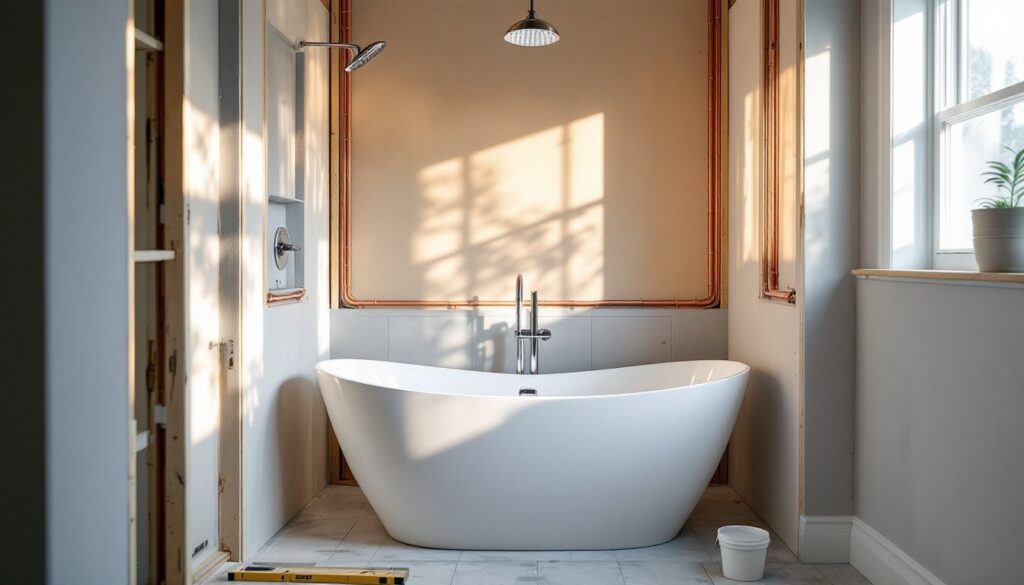

Converting a shower to a bathtub is a popular bathroom renovation that appeals to families with young children, aging homeowners seeking accessibility, or anyone who values a good soak. But before you call a contractor, understanding shower to tub conversion cost helps you plan a realistic budget. The scope ranges from straightforward fixture swaps to significant plumbing and structural work, and costs vary widely depending on your existing setup, local labor rates, and material choices. This guide breaks down what you’ll actually spend and how to make smart decisions that fit your budget.
Table of Contents
ToggleKey Takeaways
- Shower to tub conversion cost ranges from $1,000–$3,000 for simple fixture swaps to $3,000–$6,000+ when rerouting plumbing or reinforcing structural elements.
- Material costs for the tub, surround, and fixtures typically total $1,500–$2,500 for mid-range options, but premium selections can exceed $5,000.
- Existing plumbing layout is the primary cost driver—if your shower drain and supply lines already align with tub requirements, you save thousands in labor.
- Hiring licensed plumbers for supply, drain, and venting work is mandatory and protects code compliance, while DIY prep work like demolition can save $300–$800.
- Using fiberglass or acrylic surround kits instead of custom tile saves $800–$1,500 in both materials and labor while shortening project timelines.
Understanding Shower To Tub Conversion Basics
A shower-to-tub conversion isn’t one project, it’s really a category of projects that range in complexity. The simplest scenario: you have a stall shower with existing plumbing rough-ins that already accommodate a bathtub enclosure. In this case, you’re mostly swapping fixtures and may need minor adjustments. The more involved route happens when your shower stall is too narrow, the drain line is in the wrong place, or the existing framing won’t support a tub’s weight.
You’ll need to understand your current setup first. Is the shower recessed into the wall? How are supply and drain lines routed? Are there structural joists underneath? These details determine whether the job is a weekend afternoon or a multi-week renovation. Cosmetic conversions (new tub, new surround, new fixtures) typically fall into the DIY-friendly or general contractor territory. Moving plumbing lines, cutting into walls, or reinforcing floor joists usually requires licensed plumbers and carpenters, and possibly permits.
Average Conversion Costs And Price Breakdown
Labor Expenses
Labor is the biggest variable in shower-to-tub conversion costs. According to comprehensive pricing data on tub-to-shower conversions, a straightforward job with minimal plumbing changes runs $1,000–$3,000 in labor for licensed plumbers and general contractors combined. If you need to reroute supply lines, move the drain, or reinforce the subfloor, expect $3,000–$6,000 or more.
Regional differences matter significantly. Labor rates in urban areas and coastal markets are 40–60% higher than in mid-size cities or rural regions. A plumber charging $75–$100 per hour in one state might charge $120–$150 in another. Get multiple quotes from local contractors before assuming a national average applies to your job.
Materials And Fixtures
The tub itself is just one line item. A basic acrylic or fiberglass tub runs $300–$800. Cast iron or steel options cost $400–$1,200. Premium soaking tubs or Japanese-style fixtures can reach $2,000–$5,000+. Beyond the tub, you’ll need surround materials, which break down roughly as follows:
- Tile surround (ceramic, porcelain, or stone): $500–$2,000 depending on square footage and material grade
- Fiberglass or acrylic surrounds (one-piece or three-piece kits): $300–$1,000
- Plumbing fixtures (faucet, showerhead, handles): $200–$800
- Drain, vent, and trim: $100–$300
If existing plumbing is accessible and doesn’t require relocation, materials alone for a mid-range conversion might total $1,500–$2,500. Add structural work, new framing, reinforced subfloor, or relocated drain lines, and materials jump to $2,500–$4,000+.
Factors That Impact Your Total Project Cost
Several factors push costs up or down. Existing plumbing layout is the primary driver. If your current shower drain and supply lines already align with where a tub needs them, you save thousands. If not, running new copper or PEX supply lines, moving a 2-inch drain line, and venting properly adds $1,500–$3,000 in labor and materials.
Structural considerations matter too. Most modern floor joists handle a tub’s weight (a filled tub weighs 300–800 pounds depending on size and material), but older homes sometimes need reinforcement. Sistering joists or adding support beams runs $500–$1,500. Rotted subfloor from water damage is a hidden cost that only shows up once walls come open, budget a contingency of 10–15% for surprises in older homes.
Wall condition and tile prep affect surround costs. If your existing shower has tile that’s in good shape, you might salvage the wall. If drywall is water-damaged or mold is present, tear-out and replacement costs climb. Permits and inspections are often overlooked but mandatory for plumbing and structural work in most jurisdictions. Permits typically cost $150–$500 and inspections add a few hundred more, but they protect your home’s value and insurance coverage.
Finishing details, lighting, ventilation upgrades, heated floors, designer fixtures, add incrementally but can quickly balloon a “simple” conversion into a full bathroom remodel.
DIY Vs. Professional Installation: What You Should Know
Some shower-to-tub conversions are DIY-worthy: most require at least one licensed pro. If your setup is a basic fixture swap with no plumbing moves, a handy homeowner can handle demolition, surface prep, tile setting, and finish carpentry. You’ll save $1,000–$2,500 in labor. But, plumbing connections, venting, and code compliance demand licensed work in almost every jurisdiction.
Attempting DIY plumbing without proper permits courts expensive problems. Failed inspections, improper drains, or frozen pipes in winter aren’t worth the headache. Hire a licensed plumber for supply and drain work: they’ll ensure code compliance, verify water pressure and vent sizing, and stand behind the work with a warranty.
You can DIY prep work: demolition, framing modifications, and wall opening. These tasks save labor costs and keep the project moving. Sites like ImproveNet offer cost guides and contractor resources to help you understand which parts truly need professionals. Frame it as a hybrid: bring in plumbers and tile setters for their specialties, and handle demolition and painting yourself.
Be realistic about skill level and time. A professional crew completes the job in 1–2 weeks. A hobbyist might stretch it to 4–6 weeks, which means your bathroom is out of commission longer and any mistakes become your liability.
Money-Saving Tips For Your Conversion Project
Start by choosing your tub and surround material wisely. A fiberglass or acrylic surround kit is significantly cheaper than custom tile, easier to install, and faster. Tile is beautiful and durable, but labor for proper waterproofing, grout sealing, and tile setting costs more. If you’re budget-conscious, the kit approach saves $800–$1,500 in both materials and labor.
Time your project during the contractor off-season (late fall or winter in many regions) to negotiate better rates. Many contractors offer 10–15% discounts when work is slower. Request a detailed bid that itemizes labor, materials, permits, and contingency separately so you know where money goes and can make trade-off decisions.
Do the grunt work yourself: tear out the old shower, haul debris, and prep walls. This saves $300–$800 in labor. Keep plumbing and structural work with licensed professionals, penny-pinching here costs more later.
Buy fixtures and materials during sales or from contractor supply networks like Angi, which often have discounts compared to big-box retail. Check for floor-model tubs or slight cosmetic blemishes (scratches that will be hidden by surround material) for 20–30% savings.
Finally, avoid scope creep. A shower-to-tub conversion shouldn’t include flooring upgrades, lighting overhauls, or vanity replacements unless they’re essential. Each addition extends the timeline and costs. Stay focused on the core conversion to keep your budget intact.