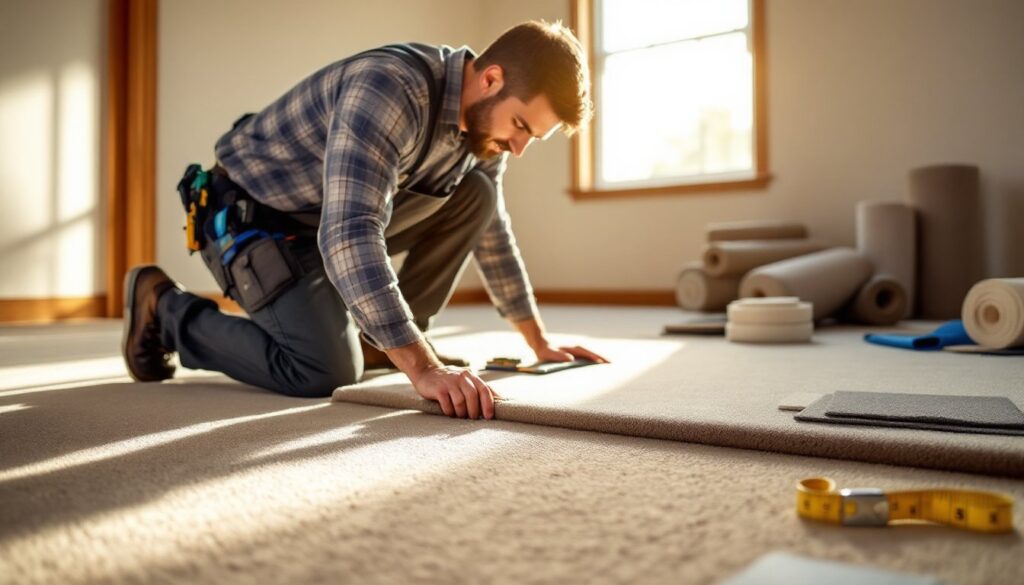

Replacing carpet is one of those home projects that catches most homeowners off guard with its price tag. You might find a beautiful broadloom at the big-box store for $3 per square foot, then get quoted $8–$12 per square foot for installation, sometimes more depending on your location and the carpet’s complexity. The total cost of carpet installation in 2026 depends on a surprisingly long list of variables: room size, carpet grade, regional labor rates, floor prep, and whether you’re dealing with stairs, transitions, or existing adhesive removal. Understanding these cost drivers upfront helps you budget accurately and spot overpriced quotes before signing a contract. This guide breaks down what you’ll actually pay and shows you how to find savings without cutting corners.
Table of Contents
ToggleKey Takeaways
- Carpet installation costs typically range from $10 to $25 per square foot installed, with labor rates between $8 and $15 per square foot depending on your region and market conditions.
- Site-specific variables like room size, carpet type, stairs, and transitions significantly impact your total price—small rooms often trigger flat labor charges while stairs add $15–$25 per tread.
- Polyester offers budget-friendly durability for low-traffic areas, while nylon costs 15–25% more but performs better in high-traffic zones like hallways and entryways.
- Always request detailed quotes from at least three local installers that break down material, labor, removal, padding, and add-ons separately before committing to a contract.
- Timing your purchase for spring or fall sales, buying carpet and installation together, and completing prep work yourself can save $2–$4 per square foot without compromising quality.
- Beware of quotes significantly below regional averages as they often indicate cut corners on prep work or padding, while warranties on seams and stretch from reputable installers protect your investment.
Average Carpet Installation Costs by Region and Material
As of 2026, national averages for carpet installation labor run between $8 and $15 per square foot, with material costs ranging from $2 to $10 per square foot depending on fiber type and quality. Your total bill, material plus labor, typically lands between $10 and $25 per square foot for standard residential carpet.
Regional differences are significant. Urban markets in the Northeast and West Coast see higher labor rates: rural areas and parts of the South generally cost less. A 200-square-foot bedroom might run $2,000–$2,500 installed in an expensive market, while the same job in a mid-range area could be $1,400–$1,800.
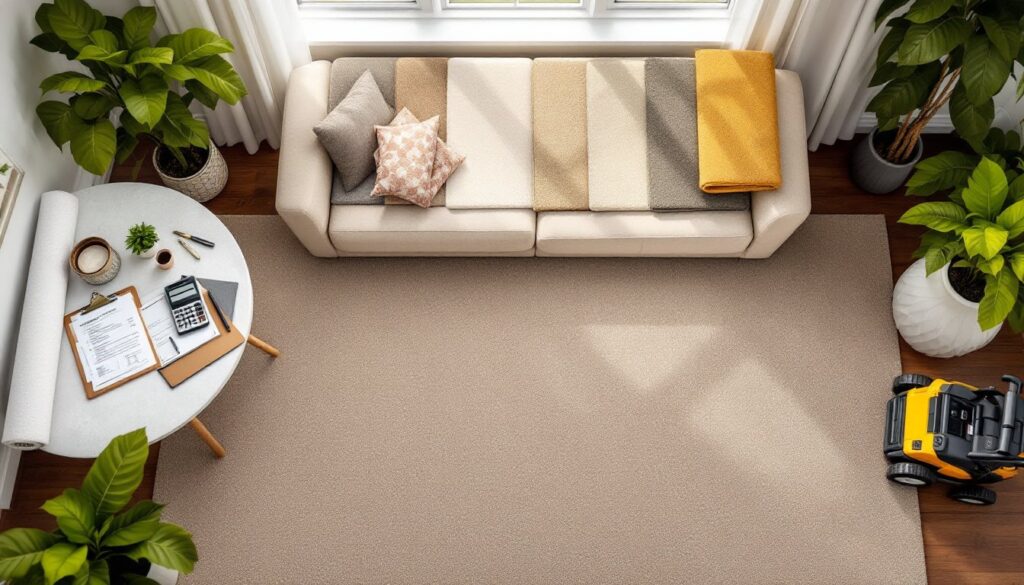
Carpet fiber type influences both material and labor cost. Polyester is the budget-friendly baseline, durable, stain-resistant, and widely available. Nylon costs 15–25% more but wears better in high-traffic zones. Wool carpet is the premium choice at $8–$15 per square foot for material alone, offering longevity and natural resilience but requiring careful installation and specialized cleaning. Polypropylene (olefin) falls between polyester and nylon in price and performance. Installation labor remains fairly consistent regardless of fiber: what shifts with material quality is the carpet cost itself.
Factors That Impact Your Total Installation Price
Several site-specific variables separate a straightforward $10/sq ft job from one that balloons to $18/sq ft or higher.
Room Size and Square Footage
Small rooms, hallways, closets, bathrooms under 100 square feet, often trigger a minimum labor charge instead of per-square-foot pricing. Installers may quote a flat $300–$500 for a 50-square-foot bathroom rather than calculate it linearly. Large, open spaces (1,500+ sq ft) sometimes qualify for slight per-sq-ft discounts because the installer works more efficiently without constant room transitions. Stairs, doorways, and closet transitions add labor: an installer typically charges $15–$25 per stair tread, and each transition threshold costs $5–$15 extra. Old baseboards that need removal or replacement also increase labor time.
Carpet Type and Quality Level
Berber carpet (looped pile) is cheaper to manufacture and usually costs $3–$6/sq ft material, making it popular for rentals and basements. Saxony (soft cut pile) runs $4–$8/sq ft and feels plush underfoot. Frieze (tightly twisted, more durable) sits in the $5–$9/sq ft range. Cut-and-loop patterns add visual interest and run $6–$12/sq ft.
Pad (underlayment) quality also affects total cost. Standard rebond pad is $0.50–$1/sq ft: denser memory foam or moisture-barrier pad runs $1.50–$3/sq ft. High-traffic areas and basements benefit from better pad, but many installers bundle a basic pad into their labor quote. Removal of existing carpet and old pad typically costs $1–$3/sq ft, though some contractors include this as part of their floor-prep charge. If your subfloor needs repair, patching, or leveling, that’s extra, sometimes $2–$6/sq ft depending on extent.
How to Get Accurate Carpet Installation Quotes
Accurate quotes start with detailed measurements and clear material choices. When calling installers, have your room dimensions, floor plan, and existing carpet photo ready. Specify the carpet style and quality tier you’re considering, don’t just say “mid-range carpet.” Mention any stairs, transitions, or problem areas (wet spots, uneven subfloor, old adhesive residue).
Request quotes from at least three local installers and make sure each includes material cost, labor, removal of old carpet, new pad, transitions, and any site-specific add-ons. A trustworthy estimate breaks costs down line by line. Platforms like HomeAdvisor connect you with vetted local contractors and help you compare bids side by side. Ask for references, especially from jobs done in the past six months, newer reviews reflect current pricing.
Be wary of quotes that are significantly lower than the regional average: they often signal cut corners on prep work, thin padding, or rushed installation. Cheap labor rarely translates to good seams, proper stretch, or longevity. Conversely, don’t automatically assume the highest quote is best: sometimes it reflects overhead or reputation rather than superior workmanship. When you receive quotes, ask what warranty the installer offers on seams and stretch. Most reputable installers back their labor with a 1–2 year warranty against seam separation or wrinkles.
Money-Saving Strategies for Your Carpet Project
Timing your purchase and installation can yield real savings. Carpet sales often spike in early spring and fall, and end-of-month clearance sometimes brings 20–30% discounts on in-stock styles. Buying carpet and installation together from a single contractor (rather than DIY material purchase paired with external labor) sometimes nets a better per-sq-ft rate because the installer controls quality and logistics.
Consider material trade-offs strategically. Polyester performs well in bedrooms and low-traffic living spaces and can save $2–$4/sq ft versus nylon: reserve nylon for hallways, stairs, and entryways. Likewise, a standard rebond pad is adequate for most residential use: splurging on premium pad shines in high-moisture areas or heavily trafficked zones, not everywhere. Services like Angi provide project cost guides and contractor reviews that help you identify realistic pricing for your specific situation before contacting installers.
Another savings path: install carpet in phases. Tackle the main living areas now and defer bedrooms or a second floor. Each project gets its own minimum charge, but spreading costs across two years eases the budget hit. Some installers offer loyalty discounts if you return for additional rooms within a year.
Don’t overlook prep work as a cost factor. If you remove old carpet and pad yourself beforehand (and dispose of them), you save $1–$3/sq ft. It’s physically demanding, old adhesive can be stubborn, but doable with a floor scraper, utility knife, and patience. Patching obvious subfloor damage before the installer arrives also prevents surprise overages. Tools like ImproveNet’s renovation guides walk homeowners through pre-installation steps that reduce contractor time.
Conclusion
Carpet installation costs boil down to material grade, room size, location, and the quality of prep work and labor. A realistic budget for most homeowners falls between $12 and $20 per square foot installed, but that range widens depending on your choices and region. Get multiple quotes, ask questions about warranties and labor breakdowns, and don’t rush the decision. The cheapest estimate isn’t always the best value, but neither is blind overpaying. Honest communication with installers about your timeline, budget, and material preferences yields quotes you can trust and a finished product built to last.