
When your dishwasher stops draining or makes grinding noises, the pump is often the culprit. The dishwasher pump is one of the most critical components in any dishwasher, and when it fails, you’re facing either a repair bill or replacement. In 2026, pump replacement costs range anywhere from $300 to $900 depending on the model, whether you hire a pro, and whether you tackle it yourself. Understanding what you’re paying for, parts versus labor, your dishwasher’s age, and your options, helps you make a smart decision without overpaying.
Key Takeaways
- Dishwasher pump replacement costs range from $300 to $900 in 2026, with parts running $80–$300 and professional labor adding $150–$250 depending on brand and location.
- The dishwasher pump is the engine that moves water through the machine; when it fails, water pools at the bottom of the tub and dishes come out wet and dirty.
- Premium brands like Bosch and Miele have pricier pump assemblies ($250–$300), while budget brands like GE and Frigidaire cost significantly less ($80–$150).
- DIY pump replacement can save $100–$250 in labor if you’re mechanically inclined, but professional repair is worth the cost for high-end models or if you’re uncomfortable with appliance repairs.
- Before assuming pump failure, check for simple culprits like kinked drain hoses, clogged filters, or mineral buildup—which can be fixed for free or minimal cost.
- The age of your dishwasher matters: repairs make sense for newer models (2–5 years), but 10+ year-old units may be better replaced entirely.
What Does A Dishwasher Pump Do?
The dishwasher pump is the engine that moves water through your machine. During the wash cycle, it forces pressurized water onto the spray arms, which shoot water across the dishes. At the end of the cycle, the drain pump empties the dirty water from the tub. Most modern dishwashers have two pumps: a wash pump and a separate drain pump, though some older models combine both functions.
When a pump fails, you’ll notice water sitting in the bottom of the tub after a cycle, or hear a grinding or squealing sound during operation. A failing pump won’t drain water properly, leaving dishes wet and potentially promoting mold and odor. Unlike a simple fix like replacing a spray arm or cleaning a filter, pump failure means the machine can’t function properly and repair or replacement becomes necessary.
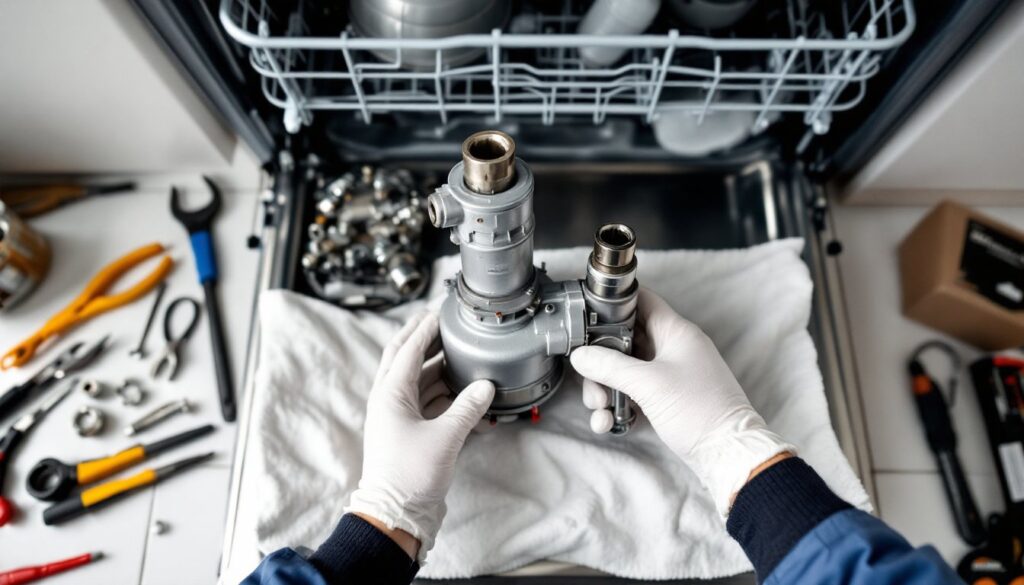
The pump itself is a sealed motor assembly usually located at the bottom center of the dishwasher. It’s connected to the tub via a circulation hose and electrical connectors. Accessing it requires removing the pump assembly from underneath the tub, not a five-minute job, which is why labor costs add up fast.
Average Dishwasher Pump Replacement Cost
As of 2026, pump replacement typically runs between $300 and $900 total. If you’re hiring a professional technician, expect $150–$250 for labor alone, plus the cost of the replacement pump part itself. A straightforward pump replacement by a licensed technician, one who’s done hundreds of these jobs, takes 1–2 hours. Your actual cost depends heavily on whether you’re paying labor, which pump is failing, and your dishwasher’s brand and model.
Parts Cost vs. Labor Cost
A replacement pump assembly costs $80–$300 depending on your dishwasher brand and model. Budget brands like GE or Frigidaire pumps run closer to $80–$150, while premium brands like Bosch or Miele can hit $250–$300. Third-party pumps or aftermarket replacements are cheaper ($60–$120) but come with longer lead times and sometimes less warranty coverage.
Labor is where the bill balloons. A service call from an authorized dealer technician typically starts at $150 for diagnosis alone. If they replace the pump, factor another $100–$200 in labor depending on your region and the shop’s rates. A local independent appliance repair shop might charge $120–$180 total for labor. In high-cost metro areas (New York, San Francisco, Los Angeles), expect technician rates of $200–$250 per hour.
If your dishwasher is still under warranty (usually 1–2 years), the manufacturer covers the part and sometimes labor, verify your coverage before paying out of pocket. Extended warranties purchased at sale sometimes include pump failure, so check your paperwork.
Factors That Affect Pump Replacement Pricing
Several variables shift the total cost up or down. The age of your dishwasher matters: if it’s 10+ years old, a repair might not make sense economically compared to replacement. Newer models (2-5 years old) almost always justify a repair because you’ve got many years of service left.
Pump availability also plays a role. Common models have pumps in stock: rare or discontinued models require special order, adding days to the repair timeline and sometimes a higher parts cost. The complexity of accessing the pump varies by model. Some dishwashers require removing the entire tub: others let technicians pull the pump from below, which cuts labor time and cost.
Brand and Model Differences
Whirlpool, Maytag, and GE pump assemblies are typically $80–$160 because they’re widely available. Bosch, Miele, and KitchenAid pumps run $200–$300 because they’re more proprietary. LG and Samsung dishwashers often require special-order parts, adding lead time and sometimes 15–20% to the part cost.
Wash pump versus drain pump also affects cost. Drain pumps are usually cheaper ($80–$150 part cost) because they’re simpler. Wash pumps are more complex and often more expensive ($150–$300). If your tech identifies that both pumps are failing (rare but possible in older machines), you’re looking at $400–$600 just in parts.
The condition of surrounding parts also sneaks into costs. While replacing a pump, a technician might spot a failing circulation hose or worn gasket. Replacing those adds $50–$150 each. Honest techs will ask before replacing extras: others bundle them in without asking.
DIY Replacement vs. Professional Repair
Replacing a dishwasher pump yourself can save $100–$250 in labor, but it’s not a casual weekend project. You’ll need basic hand tools (socket wrench, screwdrivers, pliers), a pump assembly part ($80–$300 depending on model), and about 2–3 hours of time. The difficulty level is moderate: you’re disconnecting hoses, unbolting a sealed motor assembly, and wiring connectors, not structural work, but precision matters.
Start by confirming the pump is actually bad. Run a test cycle and listen for grinding or squealing, or check if water drains at all. Some apparent pump failures are actually clogged filters or blocked drain hoses, a $0 fix. Watch a model-specific YouTube video before you commit: if the pump sits under a spray arm tower requiring removal of the entire tub, you’re looking at complexity and frustration.
Before you begin, turn off power to the dishwasher at the circuit breaker and shut the water supply. Wear gloves and safety glasses, pump housings have sharp edges. Disconnect the water inlet hose, outlet hose, and electrical connectors carefully: take photos as you go so you remember the order. Remove mounting bolts securing the pump to the tub (usually 3–4 bolts). Install the new pump by reversing the steps, ensuring hoses are tight and connectors are seated fully.
Professional repair makes sense if you’re uncomfortable with mechanical work, your dishwasher is a high-end model (where a mistake is costly), or you want a warranty on the work. Licensed technicians carry insurance and stand behind their repairs. If the pump installation reveals structural issues under the tub, a pro can diagnose and adjust. For peace of mind and longevity, many homeowners choose to pay the labor cost.
One honest reality: if this is your first appliance repair, professional labor is worth the cost. A mistake, like a hose not sealed or a connector loose, can cause water damage under your cabinet. That repair bill dwarfs the $150 you saved.
Signs Your Dishwasher Pump Needs Replacement
Not every drainage issue means the pump is dead. Water pooling at the bottom after a cycle is the clearest sign, it means water isn’t being expelled. Grinding, squealing, or whining noises during the wash or drain phase usually point to a worn or failing pump motor. If the dishwasher runs its cycle but dishes come out wet and dirty, the wash pump isn’t circulating water properly.
Odor or mold buildup inside the tub, especially around the door gasket, often follows a drainage failure because standing water breeds bacteria. Leaks under the dishwasher during operation can indicate a cracked pump housing or loose hose connection: a tech needs to inspect before you assume it’s the pump.
Before calling for repair, check the obvious culprits. Is the drain hose kinked under the sink? Is the filter screen clogged with food debris? Does the drain line leading to your sink drain freely? Run a cycle with hot water and a cup of white vinegar to clear mineral buildup. If water still won’t drain and you hear no pump motor sound at all, the pump likely failed and replacement is your next step. Consult the HomeAdvisor cost guide for dishwasher repair to compare local estimates against national averages for your area. Many homeowners use platforms like Angi to request quotes from multiple local technicians and compare pricing side-by-side, which takes the guesswork out of what you should pay.