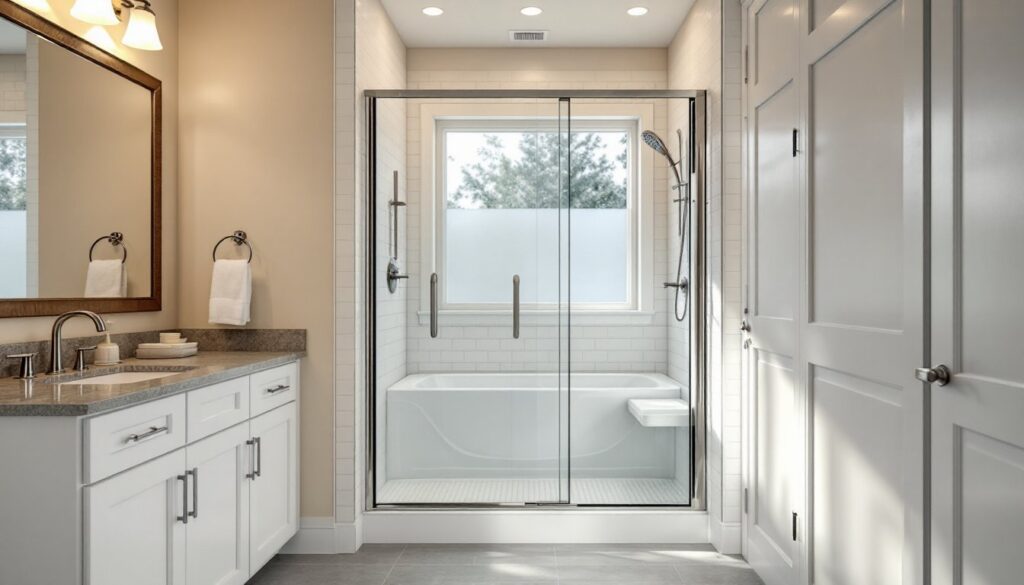

Installing a walk-in tub with shower combination can transform accessibility in your bathroom while adding genuine utility to your home. But before you commit, you need honest numbers, not vague estimates. The true cost of a walk-in tub with shower depends on much more than the unit price tag. Labor, plumbing modifications, electrical work, and your home’s existing conditions all factor into what you’ll actually spend. This guide walks through the realistic costs homeowners face in 2026, breaks down where your money goes, and shows you concrete ways to keep the project on budget.
Key Takeaways
- The cost of a walk-in tub with shower ranges from $6,600 to $17,500 total, with the unit itself accounting for $3,000–$8,000 and installation labor often equaling or exceeding the equipment cost.
- Installation expenses extend far beyond the unit price, including plumbing modifications ($800–$2,500), electrical work ($300–$1,000), waterproofing and tile work ($1,000–$3,000), and permit fees that vary by jurisdiction.
- Choosing a standard-size unit, minimizing plumbing changes, and selecting mid-range shower features rather than luxury add-ons are proven ways to reduce your overall walk-in tub installation budget.
- Most homeowners spend between $8,000 and $12,000 for a complete, code-compliant walk-in tub with shower installation when the bathroom has reasonable existing plumbing and electrical access.
- Always obtain detailed quotes from at least three contractors, verify licensing, and never skip permits and inspections—they protect both your investment and your home’s structural integrity.
Understanding Walk-In Tub and Shower Combo Pricing
Walk-in tubs with integrated shower systems range significantly in price, and the variation isn’t random. A basic walk-in tub without shower features starts around $1,500 to $3,000. Add a full shower combo to that setup, and you’re looking at $3,000 to $8,000 for the unit alone, sometimes more for premium models with heated seats, chromotherapy lights, or advanced water jets.
The wide range reflects real differences in what you’re buying. Budget models offer straightforward entry doors and basic showerheads. Mid-range units (typically $4,000–$6,000) include better drainage, grab bars, and more durable acrylic or fiberglass construction. High-end models run $6,000–$8,000+ and feature luxury finishes, deeper soaking wells, or therapeutic jet systems.
One critical detail: many walk-in tubs require custom framing or tile work around the unit, which adds another layer of cost beyond the hardware itself. This isn’t the kind of project where you just swap out a standard bathtub and call it done.
Factors That Impact Your Total Installation Cost
Unit Size and Shower Features
Size matters more than you’d think. Standard walk-in tubs fit into alcoves, but if your bathroom layout doesn’t accommodate one, custom sizing drives cost up significantly. A corner walk-in tub with shower, for instance, costs more than a straight-wall model because it requires different plumbing and structural support.
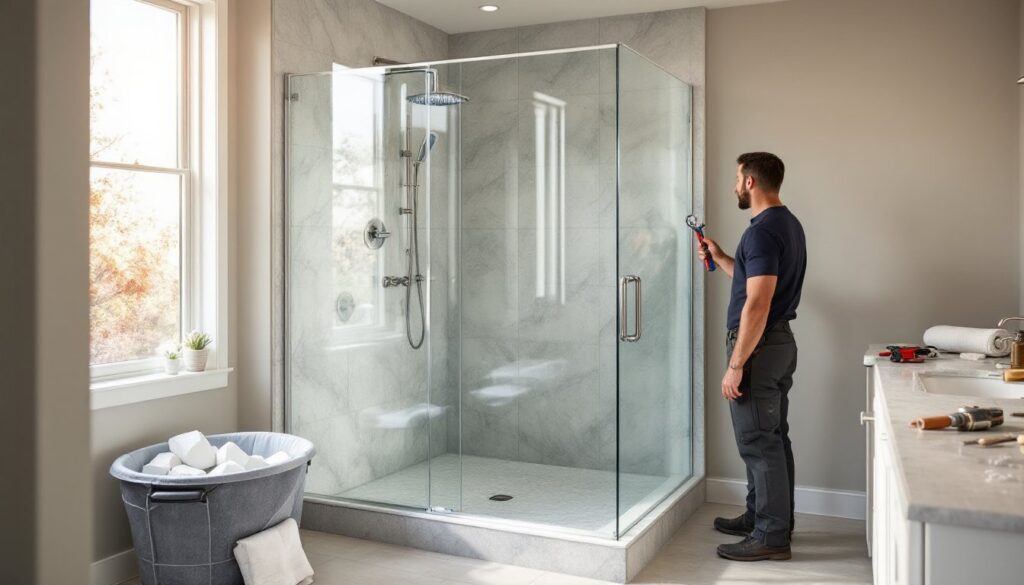
Shower features are where customization gets expensive. Handheld showerheads with adjustable pressure are standard, but rainfall showerheads, body jets, and steam functionality add $500 to $2,000 to the unit price. If you want a seated shower area within the same unit, expect an additional $1,000 to $2,500. Safety grab bars, which should be standard, not optional, add another $200 to $500 depending on material and installation labor.
Labor, Plumbing, and Electrical Work
Here’s where most homeowners get surprised: installation labor often costs as much as, or more than, the unit itself. Expect to pay $1,500 to $3,000 for skilled labor on a straightforward install. More complex setups, like those requiring structural modifications or significant plumbing rerouting, run $3,000 to $6,000+.
Plumbing modifications are usually mandatory. Your existing drain may not be positioned correctly for the walk-in tub, requiring new drain lines, vent stacks, or P-trap adjustments. A plumber will charge $800 to $2,000 for basic drain work, or significantly more if walls need to be opened to reroute existing lines.
Electrical considerations depend on your shower features. A basic shower requires minimal electrical work if you’re using a standard showerhead. But heated seats, digital controls, or steam functionality demand GFCI-protected circuits and sometimes dedicated circuits. An electrician typically charges $300 to $1,000 for these upgrades, depending on your home’s existing wiring and the distance from your electrical panel.
Waterproofing is non-negotiable and often underestimated in cost. The area around your walk-in tub shower needs proper waterproofing, typically $400 to $1,200 in materials and labor, to prevent water damage to framing and subfloor. Tile work, if you’re finishing the shower surround, adds another $1,000 to $3,000 depending on the complexity and tile quality you choose.
Breaking Down the Budget: Materials vs. Installation
A realistic project typically breaks down as follows:
Unit and fixtures: $3,000–$8,000 (the walk-in tub with shower, grab bars, and basic accessories)
Plumbing labor and supplies: $800–$2,500
Electrical work: $300–$1,000
Waterproofing and tile/surround: $1,000–$3,000
General labor and miscellaneous: $1,500–$3,000
Total realistic range: $6,600 to $17,500, with most homeowners landing somewhere between $8,000 and $12,000 for a complete, code-compliant installation.
This assumes your bathroom has existing plumbing and electrical access reasonably close to the tub location. If you’re moving plumbing from across the bathroom or dealing with older homes that require upgrades to meet current codes, like installing a new GFCI circuit or upgrading ventilation, costs climb quickly.
One often-overlooked expense: permit fees and inspections. Depending on your jurisdiction, bathroom remodeling permits range from $100 to $500, and you’ll likely need separate plumbing and electrical inspections at $75 to $200 each. Some municipalities require inspections at multiple stages, which adds time and cost.
Ways to Save Money on Your Walk-In Tub Installation
Reducing costs doesn’t mean cutting corners on safety or structural work. Here are legitimate ways to lower your final bill:
Choose a standard-size unit. Custom or oversized walk-in tubs with shower features cost significantly more. Staying with sizes that fit common bathroom alcoves (typically 30–36 inches wide) keeps the unit cost down and simplifies installation.
Keep plumbing changes minimal. If your existing bathroom layout allows the tub to sit reasonably close to current drain and water supply lines, you avoid expensive rerouting. Work with your contractor to evaluate placement that minimizes new plumbing runs.
Select mid-range shower features. Skip the luxury add-ons (steam, advanced jet systems, chromotherapy) unless they genuinely matter to you. A quality fixed or handheld showerhead with proper drainage and grab bars covers accessibility and functionality without the premium cost.
Do some prep work yourself. If you’re comfortable with basic demolition, removing the old tub and prepping the bathroom saves labor costs. But, only do this if you’re careful, damaging plumbing, electrical lines, or structural elements during demo will cost far more to fix.
Get multiple contractor quotes. Costs vary based on local labor rates, contractor experience, and project complexity. Comparing detailed quotes from at least three contractors gives you realistic pricing in your area and sometimes reveals cost-saving options you hadn’t considered.
Check insurance or healthcare benefits. If the walk-in tub is for accessibility due to age or mobility issues, your homeowner’s insurance or Medicare (for qualifying situations) may cover part of the cost. It’s worth investigating before you pay out of pocket.
Resources like HomeAdvisor and Angi provide cost breakdowns and contractor reviews specific to your region, which helps you set realistic expectations before getting quotes.
Conclusion
A walk-in tub with shower is a substantial investment, expect to spend between $6,600 and $17,500 depending on your choices and home’s condition. The unit itself is just one piece of the puzzle. Plumbing, electrical, waterproofing, and labor make up the majority of the cost. By understanding where your money goes and making informed decisions about features and contractor selection, you can complete a functional, code-compliant installation without unnecessary overspend. Start with detailed quotes, verify your contractor’s licensing, and never skip the permits and inspections, they protect your investment and your home.