
If you’re thinking about installing a smart thermostat, the first question that comes up is cost. A smart thermostat installation typically runs between $200 and $500 in labor alone, with the device itself ranging from $100 to $400 depending on features. But the real number depends on your HVAC system, how complicated your home’s wiring is, and whether you tackle the job yourself or hire a professional. Understanding the cost breakdown upfront, before you’re standing in front of your old thermostat wondering what to disconnect, saves frustration and unexpected bills.
Key Takeaways
- Smart thermostat installation costs between $300 and $500 for professional work, with labor averaging $200–$400 and the device itself ranging from $100–$400.
- HVAC system compatibility and home wiring complexity are critical cost drivers; older homes with outdated wiring or missing common wires can increase labor costs by $300–$500 or more.
- DIY installation can cut costs to just the device price ($100–$400), but requires basic electrical knowledge and carries a high risk of damage if wires are misconnected.
- Additional expenses like C-wire adapters ($20–$50) and WiFi extenders ($30–$100) can add hidden costs; verify your system’s existing wiring before purchasing.
- Get multiple quotes from local HVAC technicians, verify thermostat compatibility upfront, and consider negotiating installation costs if bundling with a furnace replacement.
- Professional installation provides expertise and warranty coverage that protects against costly HVAC system damage, making the labor fee worthwhile for most homeowners.
Average Cost Breakdown For Smart Thermostat Installation
Most homeowners spend $350 to $500 total when hiring a professional to install a smart thermostat. According to industry data, labor typically accounts for $200 to $400 of that bill, while the thermostat device itself runs $100 to $300. The average cost of smart thermostat installation at HomeAdvisor shows similar pricing, though regional differences are significant.
The device costs depend on brand and capability. A basic Nest or Ecobee model sits around $200 to $250 retail, while premium models with extra sensors or features push closer to $400. Budget brands cost less but may lack integrations or learning capabilities.
Labor costs vary. A straightforward swap on an existing thermostat setup in a newer home might cost $150 to $250. Older homes with outdated wiring, missing common wires, or compatibility issues push labor into the $300 to $500+ range. Some HVAC companies charge a flat service fee: others charge hourly rates between $75 and $150 per hour plus parts.
Don’t forget ancillary costs: a C-wire adapter (if your home lacks a common wire) runs $20 to $50, and additional labor to install it adds $50 to $100. A compatible WiFi extender for the thermostat might cost $30 to $100 if your signal is weak in the location.
Factors That Impact Your Installation Budget
HVAC System Compatibility
Not all smart thermostats work with every HVAC system. Heat pumps, gas furnaces, boilers, and radiant systems have different wiring requirements and control logic. A smart thermostat designed for a standard gas furnace may not function properly on a heat pump or hydronic system.
Older HVAC systems (pre-2000) sometimes lack the common wire your smart thermostat needs, forcing you to run a new wire from the furnace to the thermostat location, a job that can cost $150 to $300 in labor alone. Some systems require an external C-wire adapter or power module, adding $50 to $150 to your total.
If your HVAC unit is nearly end-of-life, installation might be bundled with a full system replacement. Smart thermostat installation on a brand-new unit is easier and cheaper because the wiring is already modern and correct.
Home Wiring Complexity
The physical distance between your thermostat and furnace plays a role. A thermostat in the hallway, 50 feet from the furnace, is standard. But if you want it relocated, say, from a drafty wall to a more central living area, running new wires bumps labor costs significantly. Running wire through finished walls, plaster, or concrete requires more skill and time than a direct path through an attic or crawlspace.
Two-story homes or those with finished basements add complexity. Pulling wire through existing wall cavities takes planning and sometimes drywall patches. Homes built before 1980 often have plaster walls, which are harder to fish wire through than drywall. Budget extra time and labor if your home’s layout is intricate.
DIY Installation Vs. Professional Installation
Going the DIY route costs only the thermostat itself, typically $100 to $400. No labor fees. No service calls. If your system is straightforward and your home has modern wiring with a common wire already in place, swapping a smart thermostat for a basic manual one is usually doable.
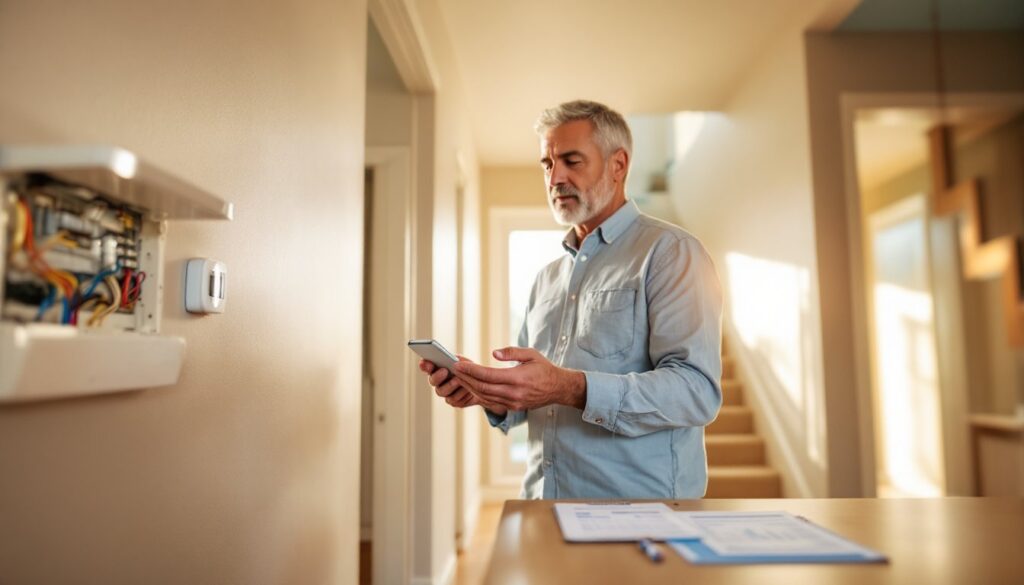
But, DIY installation requires confidence and some basic electrical knowledge. You’ll need to identify and label each wire at the old thermostat, disconnect it safely, and correctly connect it to the new unit. Most manufacturers include detailed instructions and YouTube tutorials exist for popular models. The actual installation process for many models takes 30 minutes to an hour if wiring is straightforward.
The real risk: misconnecting wires can damage your HVAC system or create a safety hazard. Gas furnaces are particularly unforgiving. If you’re uncomfortable around electrical connections or your system is older and unfamiliar, hiring a professional is the smarter call. One mistake can cost $500 to $2,000 in HVAC repairs.
Hiring a professional adds labor but brings expertise and a warranty. HVAC technicians diagnose compatibility issues before starting, ensure correct installation, and often provide a service warranty. They also handle unexpected challenges like missing wires or system incompatibilities. This peace of mind is worth the $200 to $400 labor fee for most homeowners.
Ways To Save Money On Smart Thermostat Installation
Do-it-yourself installation is the most obvious cost-saver if your setup is simple. Before calling a technician, confirm that your thermostat location doesn’t need to change and your system already has a common wire. Many newer homes and recently replaced HVAC systems have this standard. Check your existing thermostat wiring first, if it shows five or more wires (including a red C wire), you’re in good shape.
Ask about bundled pricing. If you’re replacing your HVAC system anyway, negotiate the smart thermostat installation into the overall bid. Contractors often discount labor when installing a thermostat alongside a furnace replacement.
Compare quotes from multiple HVAC companies. Don’t assume all labor charges are identical. Call three local technicians and ask for a flat-rate quote specifically for smart thermostat installation, not a consultation. You’ll often see $50 to $100 variation between shops. Sites like ImproveNet help connect homeowners with vetted contractors for competitive estimates.
Choose a thermostat brand that works with your system. Generic “works with most systems” claims aren’t always accurate. Verify compatibility before buying. A $50 cheaper unit that requires a $150 adapter negates the savings. Popular brands like Nest, Ecobee, and Honeywell have clear compatibility charts.
Skip the WiFi extender if your signal is strong. Modern smart thermostats work fine without one, and adding an extender unnecessarily adds $30 to $100. Test your WiFi signal at the thermostat location first, many homes have adequate coverage.
Conclusion
Smart thermostat installation costs between $300 and $500 for professional work, though DIY installation can cut that to just the device cost. Your total depends on HVAC compatibility, wiring complexity, and whether you hire help. Get quotes, verify compatibility upfront, and don’t skip proper installation, a few dollars saved on labor isn’t worth risking your heating or cooling system.