
When you’re planning a major home remodel, smart home integration might seem like an optional luxury. It’s not. In 2026, incorporating intelligent systems during renovation isn’t about flashy gadgets, it’s about building infrastructure that’ll last, adapt to your lifestyle, and actually save money over time. Whether you’re updating one room or overhauling your entire house, baking in smart home capabilities now means avoiding expensive rewiring, wall-cutting, and integration headaches later. Homeowners who plan smart from the start report fewer post-renovation regrets and better long-term property value. This guide walks you through the essential systems, budget-conscious upgrades, and design principles that’ll keep your remodel future-proof.
Table of Contents
ToggleKey Takeaways
- Smart home remodeling during construction is 3–5 times cheaper than retrofitting later, making infrastructure planning during the renovation the critical window for cost-effective integration.
- Prioritize high-ROI systems first: a smart thermostat, WiFi-enabled switches, and a WiFi 6 mesh network deliver $800–$1,500 in installed costs and yield tangible savings on heating and cooling bills (10–15% annually).
- Run network cabling (Cat6/Cat6A) and low-voltage conduit alongside power and plumbing during rough-in to avoid cutting into finished walls and ensure reliable smart device performance.
- Smart home technology standards like Matter protocol are essential—ask installers about compatibility to avoid device obsolescence and ensure systems from different brands communicate seamlessly.
- Document all infrastructure during construction with photos and spreadsheets of circuit numbers, conduit runs, and sensor placements to future-proof your home and simplify future upgrades.
- Smart security systems (locks, cameras, motion sensors) should be hardwired during framing with dedicated mesh WiFi nodes near entry points to ensure reliable alerts when you’re away.
Why Smart Home Technology Is Essential for Modern Remodeling
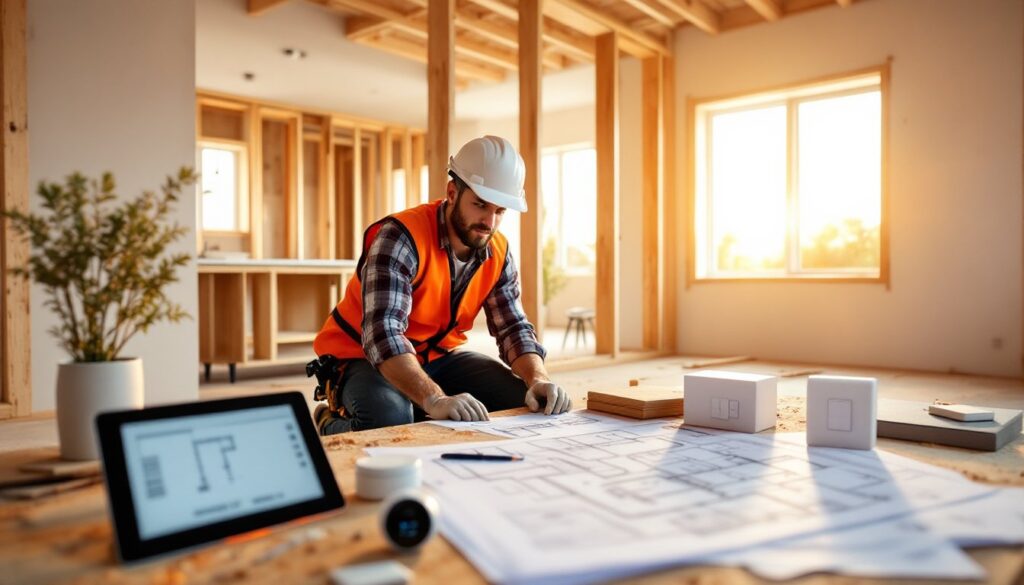
Smart home integration during a remodel isn’t like bolting gadgets onto an existing house, it’s about planning your electrical runs, network infrastructure, and control systems alongside the framing, plumbing, and HVAC work you’re already doing. If you’re already opening walls, rerouting conduit, and upgrading panels, the marginal cost of adding smart-ready wiring is tiny compared to doing it later. Once drywall goes up, every additional smart device or system integration becomes labor-intensive and expensive.
Beyond convenience, there’s substance here. Smart thermostats paired with proper insulation cuts heating and cooling costs by 10–15% annually. Smart lighting with occupancy sensors eliminates waste. Security systems with remote monitoring and smart locks reduce break-ins and give you real peace of mind. The practical benefit is clear: smart home remodeling isn’t about automation theater, it’s foundational to efficient, modern homes. Building these systems into your remodel is the smart move: retrofitting them later costs three to five times more.
Core Smart Home Systems to Prioritize in Your Remodel
Lighting and Climate Control Integration
Start with lighting and climate because these two systems affect comfort and utility bills daily. During your remodel, work with an electrician to run Cat6 or Cat6A network cabling alongside power runs, treat it like water pipes, planning runs before walls close. This infrastructure supports smart bulbs, occupancy sensors, and control hubs without loose wireless signals.
For climate, a smart thermostat paired with zone dampers (if you’re upgrading HVAC) gives you room-by-room temperature control and learning capabilities. Brands like Ecobee and Nest integrate with your remodel’s new ductwork or radiant systems. Plan for a dedicated 120V outlet near the thermostat location, thermostats need stable power, not a shared circuit that powers a vacuum cleaner. If you’re adding radiant floor heating during remodel, running sensor wire in the screed before pouring concrete is the only practical time to do it.
Lighting deserves real attention. Smart switches (not just smart bulbs) let you control standard dumb fixtures through existing wall boxes. If you’re renovating a room, swap in WiFi-enabled switches during the remodel, the labor is already there. Pair these with occupancy sensors in low-traffic areas (hallways, bathrooms, closets) to eliminate unnecessary usage. Smart Home Tech for Beginners covers entry-level setups if you’re starting from scratch.
Security and Access Systems
Security belongs in the remodel plan because you’re already upgrading power delivery and may be relocating walls or adding exterior doors. Plan conduit runs to entry points for smart door locks, security cameras, and alarm sensors before framing gets locked in. A hardwired security system backbone (Category 5 cable runs to front door, garage, and windows) gives you flexibility to add cameras, motion sensors, and access control later without cutting into finished walls.
Smart locks are the gateway device, they replace traditional deadbolts and integrate with your phone, keypads, and temporary access codes. Pair them with a security hub (like Ring, Abode, or Vivint) that feeds video and motion alerts to your phone. Install security-grade outdoor-rated camera housing and weatherproof junction boxes during rough-in, so cameras mount cleanly when finish work begins. Avoid running these systems on shared WiFi: a dedicated mesh network node near entry points ensures reliable performance when you’re away and need alerts instantly.
Budget-Friendly Smart Home Upgrades for Every Homeowner
You don’t need to drop $50,000 to build smart into your remodel. Prioritize high-ROI upgrades: a smart thermostat, smart switches, and a reliable WiFi mesh system. These three run $800–$1,500 installed and deliver tangible savings and convenience.
Start with a WiFi 6 mesh network (not a single router). Eero, Netgear Orbi, or TP-Link AXE300 cover larger homes without dead zones, essential for smart home reliability. This is foundational: everything else depends on stable connectivity. During remodel, run a single ethernet backbone from your main panel or closet to 2–3 strategic points (kitchen island, master bedroom hallway, garage entry). This cost roughly $200–$400 in labor and materials and pays dividends by letting you place mesh nodes where they actually reach.
WiFi-enabled smart switches beat expensive smart bulbs for value. A single GE Enbrighten or Lutron Caseta switch costs $25–$40 and controls standard bulbs through the wall. Replacing a light switch during remodel costs the same labor as normal wiring: the smart version adds minimal cost. Stack a dozen switches across your remodel, and you’ve got room-wide smart control for under $1,000 in materials.
For climate, a Honeywell or Ecobee smart thermostat ($150–$200) pays for itself in 1–2 years through efficient scheduling and learning. Don’t cheap out here, brands matter: budget thermostats fail to learn patterns or integrate with other systems. Add a smart humidity sensor if you’re in a humid climate or have high-moisture areas (bathroom, basement). Smart water shutoff valves ($300–$500 installed) prevent catastrophic leaks: run the sensor wire during rough-in. These aren’t luxuries, they’re insurance. Smart Home Tech Strategies outlines systematic approaches for phased upgrades if budget is tight.
Designing for Long-Term Compatibility and Scalability
Smart home standards matter more than you’d think. In 2026, Matter protocol is the emerging standard that lets devices from different brands talk to each other without proprietary hubs. During your remodel, ask electricians and smart home installers whether systems they’re suggesting work with Matter or plan to. Buying WiFi-only devices today might strand them in five years when Thread and Zigbee become dominant for reliability.
Design your network infrastructure to scale. Don’t run one 16-amp circuit for smart devices and assume it’ll cover everything. Plan for growth: a separate 20-amp circuit dedicated to network gear, smart hubs, and charging stations gives you headroom. If you’re adding an accessory dwelling unit, basement apartment, or home office during remodel, run conduit and low-voltage cabling to those spaces, future-proofing is cheapest during construction.
Choose platforms that play well together. Google Home, Amazon Alexa, and Apple Home all work, but picking one ecosystem reduces friction. If your remodel touches multiple rooms, a central hub in a closet (networked via ethernet) controls everything more reliably than WiFi alone. Top Smart Home Tech to Transform Your Living Space reviews compatible ecosystem options.
Label everything. Seriously. Run a spreadsheet during remodel listing circuit numbers, conduit runs, camera placements, and sensor zones. This document becomes invaluable when you’re adding a device two years later or troubleshooting a dead sensor. Photo documentation of before-drywall wiring runs saves headaches and future contractors hours of detective work. Smart home design isn’t just about the gadgets, it’s about infrastructure decisions that let you adapt without ripping open finished work.
Conclusion
Smart home remodeling in 2026 is about seizing the single best window to wire, plumb, and plan for connected living. The construction phase is when network runs, power planning, and structural choices cost the least and deliver the most flexibility. Build in the infrastructure now, start with the high-ROI systems (thermostat, switches, mesh WiFi), and design for compatibility and scale. Your remodel won’t just look better, it’ll work smarter, cost less to operate, and adapt to technology and lifestyle changes without requiring sledgehammers.